Showing posts with label folktales. Show all posts

Tuesday, September 20, 2011

Natural Kids Team folk tale guest post

I've written a new post for the Natural Kids Team blog, called Life Lessons in Folk Tales. I featured three folk tale picture books by storyteller Margaret Read MacDonald, plus crafty offerings by my fellow artisans. As I worked on the post, I asked my teammates if anyone would be interested in making a gecko to go along with MacDonald's Go to Sleep, Gecko! and Little Elfs Toyshop delivered:


Green gecko by Little Elfs Toyshop

Friday, May 09, 2008

Quizzical Quests with Act!vated Storytellers

The House of Glee had a good time at the Act!vated Storytellers program yesterday. It turned out that this show was seventeen-year-old Zephyr's final public performance with the company. He's got plenty of projects of his own: his band, theme park projects, film projects-- fun stuff like that. Act!vated performed two stories yesterday. The first was Simple Ivan, a folktale from Russia that had a lot of similiarities to Lazy Jack (of which I tell a slightly modern version) Epossumondas, and other stories in which the main character is so foolish that he takes the instruction for one situation and applies it to the next.


In "Simple Ivan," Zephyr pours water on Dennis and Kimberly, who are trying to cook a chicken over a fire.


The second story, The Golden Pitcher, was a Mongolian tale about vanity, foolishness, and the wisdom of people with grey hair. Kimberly is shown here fitting her body through an opening in a cave the size of a tennis racquet:

If you try this at home, be sure that (1) The racquet's strings are removed (2) You bring your leg up over your head with your foot toward your ear (3) You have someone on hand with a saw to cut the racquet in the unlikely event you get stuck.

Afterward, Lucia requested that we get a photo with Kimberly:


A number of Kimberly's internet friends attended the show, and I got to meet some of them. Hello to Neelie! I also sat next to another "librarian-in-semi-retirement" who left her job to raise her daughter and got to chat with her a bit, too.

Monday, April 14, 2008

The Sun Sisters: a short story

I really like the story called "The Sun Sisters" (full text). It's a Chinese story collected in Margaret Read MacDonald's Three-Minute Tales. I haven't yet told it, but I hope it becomes one of my stories. I'm a fan of stories that have to do with the creation and manipulation of textiles. Coincidentally, I read this story right around the time Lucia asked me why she wasn't supposed to stare directly at the sun. I was glad to have a story for her.

Tuesday, August 07, 2007

Tough Break

Yesterday afternoon, I was driving home with Lucia when we got caught in bumper-to-bumper traffic around Husky Stadium. That was nothing new. What was different, however, was the white steam that started to spew from the hood of the car. I called Bede and told him what was going on (because hey, I've overreacted in the past to things that looked scary but were really no big deal). He urged me to get out of there and pull over. There was nothing to do but drive over the median and turn right into the No-Right Turns parking lot across the way. Forty-five minutes later, Triple AAA showed up. In the meantime, I had to calm a frightened child and pray that she didn't have to pee (as she'd already had one accident while we were at the bank). I fed her a few yogurt-covered almonds and then told her the story of Why the Tides Ebb and Flow. Afterward, she drew in her sketchpad for awhile, and then started to fret once more. "We're okay," I told her. "We got off the road, help is coming, and soon we'll be home." I quoted Go to Sleep, Gecko: "Some things [we] just have to put up with."

(Years later, Lucia will probably point out that the story didn't quite happen that way. She'll probably say, "Don't you remember that you yelled at me to stop talking? And that you said rude words?" Yes, I do remember them. But I also apologized.)

So far, all that's wrong with the car is that the radiator is cracked. If that's it, then we're looking at hundreds of dollars instead of thousands of dollars. Some things we just have to put up with. Still, I wish this were a city in which public transportation were truly a viable option all the time.

Tuesday, July 31, 2007

Thinking about alternatives

I was 6 years old when I first heard Tikki Tikki Tembo by Arlene Mosel read aloud by my school librarian. The whole class loved it, and we practiced saying the main character's name: "Tikki tikki tembo-no sa rembo-chari bari ruchi-pip peri pembo." The name allegedly meant in Chinese "the most wonderful child in the world." Tikki Tikki Tembo's younger brother, Chang, had a name that meant "little or nothing." The length of Tikki Tikki Tembo's name posed a problem when the character fell into the well. The illustrations by Blair Lent are lovely and the story is top-notch. However, Mosel's story perpetuates a number of Asian stereotypes, mainly the idea that syllables from Asiatic languages are nonsensical and that the elder son is more valued than the younger son. Like Little Black Sambo and The Five Chinese Brothers, the bare-bones of the story itself is compelling but the stereotypes are offensive. (As a side note, some discussion boards point out that Tikki Tikki Tembo is actually based on an old Japanese folktale.)

Before you start to protest,"Oh, stop being so politically correct already!" and "If we get rid of every book that has racism/sexism in it, we'll have nothing left on the bookshelves," be assured that I'm not proposing we get rid of any story. However, we should think really, really hard about the books we read (especially to children) and how the stories affect all of us. At the very least, think about what it would be like to be a Chinese child listening to Tikki Tikki Tembo read aloud in a classroom.

I read about a librarian who used Tikki Tikki Tembo in her storytimes, but instead of the setting taking place in "long ago China," she had the story set on Mars, whereby the Martians all give their children long names. I haven't used Tikki Tikki Tembo in storytimes, but when the time comes where my daughter discovers the story, I'm going to use a similar approach. Still, if the main goal is for children to have a long, amusing name to recite aloud, there are alternatives:

1) Catalina Magdalena Hoopensteiner Wallendiner Hogan Logan Bogan Was Her Name, by Tedd Arnold

I don't care for the illustrations, but the song is great! I can post the chords and a link to the song for a future Song of the Week, if you like.

2) The camp song Eddie Cucha Catcha Camma Toesanara Toesanocka Samma Camma Wacky Brown.

Unlike the protagonist of Tikki Tikki Tembo, the subject of the story does come to a bad end.

In the past, I've deliberately avoided controversial topics. I've wanted to entertain you, after all. Still, I do think about these issues frequently, and want to talk about them with people who also want to talk about them. I've long ago stopped trying to please everyone (it's impossible), but I do have an obligation to present stories that provide fair, non-stereotypical depictions of the people they represent. I have no room in which to say, "Oh, it's just a story."

Do I take stories too seriously? You bet I do! And I'm not about to stop.

Thanks to TadMack for starting this discussion in another forum.

Sunday, July 29, 2007

Culture Vulture/ Story Quarry


I'm trying to figure out which folktales are okay to tell and which ones I shouldn't bring into my storytimes. Everyone exhorts "multiculturalism" and "world folktales" yet there are so many pitfalls to sharing stories from cultures outside one's own. Then again, just because someone has a particular ethnic background doesn't mean s/he is an expert. My paternal background is Syrian, Eygptian, Russian and Lithuanian. Does that mean I have carte blanche for telling stories from those countries even though I'm not overly knowledgeable of my heritage? (Answer: I think not.)

Some folktales are sacred, and aren't meant to be told outside of those sacred contexts. Many stories have been lifted from other cultures and then tweaked to reflect the values of one's own culture.

As much as I'd love to share some of the stories I've read and learned, I don't want to be a culture vulture looking for story quarry (yeah, I just made up that second part). I want to do the right thing. I wonder: if I find a collection of Iroquois stories published by someone from the Abenaki, does that constitute permission to retell the stories? Or should I just leave alone all stories that come from people who have been oppressed and continue to be oppressed? That's a lot of people and a lot of stories. I'm tired of people being identified by how they've been oppressed... as I am sure are the people who are actually oppressed.

Here's a long article that puts some of the issues in perspective: Swapping Tales and Stealing Stories: The Ethics and Aesthetics of Folklore in Children's Literature, by Betsy Hearne, published in the Winter 1999 edition of Library Trends. Hearn writes,

As more good source notes appear, however, the underlying issue of ownership comes to the fore, sometimes because information makes the question of ownership all too clear. Identifying the source of a story, is only the beginning, it turns out. The next step is considering the broader implications of who tells stories and how they tell them. Indeed, the argument of who owns a story is almost as old and traditional as the stories on which the argument focuses. (page 3 of the article)

And further in the article, Hearn points out that

certainly a culture can simply be omitted because of the complexity of dealing with all these problems, witness Eva Martin and Liszlo Gill's (1987) Tales of the Far North: "The only indigenous folktales of Canada belong to the native Canadian Indian and Inuit peoples. Because these native peoples have such a unique and beautiful tradition of storytelling, no attempt has been made to adapt their stories for this collection. Too often English-speaking storytellers retell native tales only from their own perspective, imposing upon the tales their own vision of life" (p. 123).

True, and conscientiously stated, but now we have a beautiful volume of Canadian tales with no representation of an important cultural group. So how do we deal with folktales crossing cultural and aesthetic borders in the "innocent" fields of children's literature, which on closer examination sometimes resemble battlefields of social values? Is this a no-win situation?
(page 12)

If you read through the article, you'll recognize some familiar names: Debbie Reese, Roger Sutton, Jane Yolen, Julius Lester, and Joseph Bruchac, to name a few luminaries.

07/30/07 update: Debbie Reese commented a couple of times on this post and has just published her own post in response: An often posed question: "Who can tell your stories?"

Thursday, May 10, 2007

Stuffed grape leaves and a Nasr-ed-Din story


Lucia’s fourth birthday is today. I asked her what she wanted to bring to class for the special snack, and she said, “Grape leaves.” I made a batch of stuffed grape-leaves from a modified recipe in Claudia Roden’s The New Book of Middle-Eastern Food. The bare-bones, least-you-need-to-know recipe for stuffed grape-leaves is this:

1) Cook 1 1/3 cups rice (I prefer brown).
2) Sprinkle your favorite yummy savory spices and herbs in it, plus a little olive oil and lemon-juice. Toss in a handful of pine-nuts, too, if you have them.
3) Wrap portions of the rice in grape-leaves from a jar pickled in brine.
4) Cover stuffed grape leaves lightly with olive oil and let them mellow for a few days.

You can get fancier than that, if you like. Go wild. Here is a link with photos on how to roll the grape-leaves. I rolled them a bit differently because I was in a hurry and thought I didn't need to consult the directions.

There are three reasons why The New Book of Middle-Eastern Food is my favorite cookbook. The first reason involves the delicious, easy-to-follow recipes: megeddarah (lentils, rice and caramelized onions), spinach pies, dolma (stuffed grape leaves), lahma bi ajeen (meat tarts), and more. Some recipes may take time to make, but they are rarely complicated. Some of the recipes are definitely meant to be made in a community setting: pinching the dough together for a plethora of spinach pies is much more enjoyable when people have conversations.

The second reason why The New Book of Middle-Eastern Food is my favorite cookbook involves the folktales and anecdotes scattered throughout. For example, here is the story called “The Loan of a Cauldron,” taken from Tales of Nasr-ed-Din Khoja, translated by Henry D. Barnham:

One day the Khoja asked a neighbor for the loan of a cauldron. After he had done with it, he put a small saucepan inside and took it back to the owner. When the man saw the small saucepan, he said, “What is this?” and the Khoja answered, “Your cauldron has had a baby.”

“That’s good news!” said the man, and accepted it with pleasure.

Another day the Khoja wanted to borrow the cauldron again and took it home with him.

The owner waited a long time, but he noticed that the cauldron did not come back. Then he went round to the Khoja and knocked at his door. When the Khoja came and asked what he wanted, he answered, “I want that cauldron.”

“Accept my sincere condolences!” said the Khoja, “the cauldron is dead!”

“What!” said his neighbor in the greatest amazement—“dead? Whoever heard of a cauldron dying?”

“Strange!—strange!” replied the Khoja. “You could believe that the cauldron had a baby, and yet you do not believe that it could die!”

You’ll find variations of this story all over the Middle-East, in both Muslim and Jewish cultures. I first learned it as “Yankel the Schnorer (Yiddish for ‘moocher’) and Lazeh the Miser.”

The third reason why The New Book of Middle-Eastern Food is my favorite is because the original edition was a family mainstay. My father's mother cooked from it, my mother cooked from it, and now I cook from it. Someday, Lucia shall cook from it. At least, I presume so, since she likes so many of the things I make from the cookbook.

Happy Birthday, dear Lucia! I hope your classmates at least take a taste of the stuffed grape leaves.

Tuesday, November 28, 2006

In Seattle, Snow Always Makes the News


Snow and Ice Snarl Highways

Nightmare Commute for Drivers: Snow, Commute, and a Seahawks Game

Last year, it snowed enough that I thought I should shovel my walkway. All I had was a garden shovel. After 10 minutes, I realized that I really shouldn't bother: the snow would melt by the end of the day.

The joke around here is that there are only two snow plows in the entire city of Seattle. Really, the city allegedly has twenty snow plows, but I don't remember ever seeing one in the seven years I've lived here.

Some stories with snow:

Little Daughter of the Snow, a Russian folktale

Rabbit and Fox, a folktale from the Iroquois Nation

Deirdre of the Sorrows, listed because of its twist on the Snow White description:

One day, Deirdre watched as her fosterer killed a calf to eat. The calf's blood ran bright red in the snow, and a raven swooped down.

"If there were a man with hair as black as that raven, skin as white as that snow, and cheeks as red as that blood, I would wish to marry him," Deirdre said, in what was perhaps the first manifestation of her second sight.


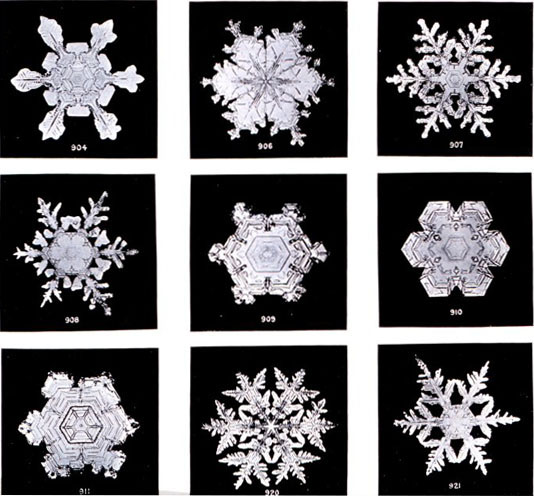
On a cheerier note, you may make your own virtual snowflake here.

Friday, November 24, 2006

Folklore about Folklore


1) In The Frog Prince, the princess does not kiss the frog to break the enchantment. In utter rage, the princess throws the frog against the wall. What does it mean that violence, and not love, transforms the enchanted frog? And where did we get the idea that “You have to kiss a lot of frogs before you find your prince?” However, I cannot quarrel with this beer ad that uses the “kissing the frog" motif:

There’s an early XXXX ad called “Castlemaine Princess” floating around as well. It features a naive young woman skipping through the countryside talking to the animals and birds. She finds a frog, kisses it hoping for a prince. What she gets is an Australian sheep shearer. It’s his turn for a wish. She turns into a bottle of Fourex Gold!

2) In Hansel and Gretel, Hansel leaves a trail of stones the first two times his father takes him out into the woods. The third time, Hansel’s father is watching him carefully, so Hansel surreptitiously leaves a trail of crumbs from the bread he had in his pocket. The birds eat the crumbs, and the children can’t track their way home. People will mention leaving a “trail of bread crumbs” to find their way back from a new, unfamiliar place. I rarely object aloud (because that would be annoying and idiosyncratic), but I think, “Please, go with the trail of stones instead. They’re more dependable.”

3) For years, I believed that the English versions of “Cinderella” featured glass slippers because Charles Perrault mistook the French word for “fur” (vair) as the French word for “glass” (verre) . Kurt Vonnegut, Jr.’s anecdote about this alleged mistranslation in his preface to Anne Sexton’s poems about Grimms’ fairy tales, Transfomations, only solidified my belief. It’s pretty cool when there is folklore about folklore, but I get grouchy when people whom I think know what they're talking about... don't. I include myself in this group of "people"-- I get sick to my stomach whenever I find out that I've passed along erroneous information and am haunted by it until I can fix it. It's not a quality, but a quirk. I irritate people when I refuse to "guess" at a statistic and qualify statements with, "I can't remember my source, so don't quote me until I verify it."

If today's topic sounds familiar to you, that may be because I've written about it before:

*Alien Abductions and Glass Slippers
*This is All a Fairy Tale

Thursday, November 09, 2006

Secrets I keep from my daughter


In the second drawer of my bureau, I am hiding a paper Victorian dollhouse that opens into a carousel shape. Lucia has played with a similar paper-dollhouse before, but she is not the most careful of toddlers when it comes to keeping the little pieces all together. I have a "bits box" where I put all of the little crowns and scepters I find on the floors, behind beds, and under couches, but they vanish anyway. Someday, I'll let Lucia play with my paperdoll house. Right now, it's mine, mine, all mine.

I'm also keeping my fairy tale books illustrated by Trina Schart Hyman on the top shelf of my bookcase. Lucia wants me to read them to her, but I'm not ready. That's what I say to her: "I'm not yet ready to read these books to you. Someday, I will read you these books, but not today." We've started reading some folk and fairy tales together, but they're more along the lines of "The Three Billy Goat's Gruff" and "Goldilocks and the Three Bears." Also, "Stone Soup" and "The Old Lady Who Lived in a Vinegar Bottle" are new favorites, too. Lucia won't eat soup, but she does like to hear stories about soup.

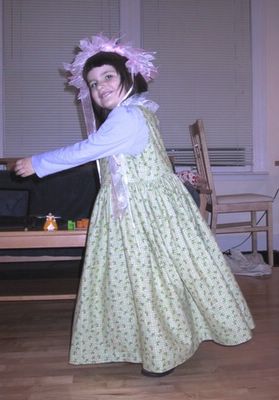
As you know, I have some issues with the Disney versions of the fairy tales. As a child, I enjoyed "Sleeping Beauty" and "Cinderella," but I have to be honest with you: what I liked best about the films were the costumes and stage-sets. I couldn't care less about winning the love of the handsome prince (my tastes ran more toward Superman and Han Solo), but oh, those fabulous clothes. I even coveted Cinderella's plain house-dress, and wished I could make a dress like it. Of course, I admired the glittery evening dress with long white gloves. Snow White's clothing didn't thrill me. I thought her dresses lacked proper swish.

I suspect that Lucia will have similar reactions to the Disney films when she finally sees them someday. Her favorite Playmobil dollies are the ones with poofy dresses and their "feet peeping out." Then again, her first word was "gace" (her attempt to say "lace"). Right now, I'm in no hurry for Lucia to see the films. If she gets it into her head that princesses don't wear sleeves on their dresses, it is going to be one long winter around here.

Memo to princesses of the world, royal and otherwise: will you please wear more dresses with long sleeves? I'd appreciate it if you'd wear mittens, coats and hats, too. Crown Princess Victoria of Sweden, for the most part, you are off the hook, even though you look a bit chilly here. Put on a sweater. Please. You're making my teeth chatter just by looking at you.

P.S. Today, I started telling Lucia, "Princesses don't eat boogers." Princesses of the world, I'm counting on you to back me up on this one.

Wednesday, November 08, 2006

Twenty-Five Things That Make Me Happy

A Wrung Sponge asked readers to write down twenty-five things that made them happy. Sure thing! I’ll list my items in groups of 5.

Five children’s books:

1) Constance—Patricia Clapp
2) The School for Cats—Esther Averill
3) Daughter of the Moon—Gregory Maguire
4) Dinner at Alberta’s—Russell Hoban (illustrated by James Marshall)
5) Henrietta’s House (UK)/Blue Hills (USA)—Elizabeth Goudge

Five folktales:

1) Why the Tides Ebb and Flow— retold by Joan Chase Bowden
2) The Old Woman Who Lived in a Vinegar Bottle— retold by Margaret Read MacDonald
3) Two Of Everything— retold by Lily Toy Hong
4) Lazy Jack— retold by Joseph Jacobs
5) “Talk” (i.e. "the talking yam story")—from The Cow-Tail Switch, retold by Harold Courlander

Five finger puppets:


Five camp skits:

1) JC Penny (In my outdoor education class, I saw this skit as "Thom McCann.")
2) Good news and bad news
3) The Man and the Coffin
4) The Most Horrible Thing in the World
5) Moon Trip

Five songs to play on the guitar in the key of G:

1) City of New Orleans
2) Orphan Girl
3) Lavender’s Blue
4) Can’t Let Go
5) On the Sunny Side of the Street
Thursday, November 02, 2006

Skeleton Stories


El Dia de Los Muertos (“Day of the Dead”) is one of my favorite holidays, even though I know very little about it other than that as an outsider to Mexican culture. My eyes are that of a tourist’s who sees the pageantry of the celebration but not the whole picture. Still, something makes me kvell to the array of cheerful skeletons.*

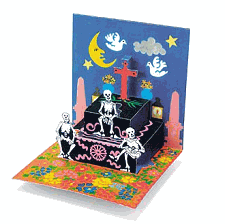
Today is All Soul’s Day, and the third day of the El Dia de Los Muertos festival. For the past five years, Bede has successfully restrained me from acquiring Day of the Dead dioramas, but this year, I bought a pop-up card to be my little shrine.

Today, I'm celebrating with skeleton stories:

A funny story:
The Dancing Skeleton
"Oooooweeee! Ain't we havin' fun!"

**A scary/romantic story:
Skeleton Woman
(you can find an in-print version of this story in Women Who Run With the Wolves, by Clarissa Pinkola Estes)

***A scary/creepy story:
Skeleton Woman (& Magic Woman)

And more. If you're just in the mood for a good alphabet book, check out Calavera Abecedario: A Day Of The Dead Alphabet Book, by Jeanette Winter. "F" is for Frida Kahlo!

*I like cheerful skeletons, just as I like cheerful bats.
**I've told this story quite a bit.
***I've told this story more often than I should've.

Wednesday, August 30, 2006

Snow White Ramble


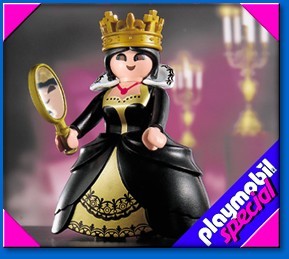
This Playmobil Special representation of the wicked queen in Grimms' Snow White fairy tale is currently not in production. On eBay, the "buy it now" price is $25.00 USD. I don't need the dolly, but I sure do wish I had clothes like hers. If Playmobil made a line of goth figures, I would be tempted. Very tempted.

Speaking of Snow White, I hate the Disney version.* Snow White needs the following items in order to work for me:

1)The wicked queen demands the huntsman to bring back the lung and liver, not the heart of Snow White. The lung and liver represent the life-essence and spirit of Snow White. The heart is smoochy-sentimental.

2)When Snow White finds the dwarfs' house in the woods, it's quite meticulous and clean. Snow White gets to live with the dwarfs as long as she makes sure it stays clean. Dwarves are industrious beings, not slobs living in basements.

3)The wicked queen in disguise visits Snow White three times in three different guises. This is important. Most of us make mistakes in judging the character of other people without it making headline news. However, Snow White making that mistake three times brings to light some uncomfortable recognition of ourselves. (Maybe you're wiser than I am, but know I've believed the words of liars.)

4)After biting the poisoned apple, Snow White wakes from her coma after the prince's huntsmen stumble upon a rock, thus dislodging the bit of apple in Snow White's throat. There is no wake-up kiss. That's another fairy tale.

5)In the end, the wicked queen has to put on red-hot iron slippers and dance until she falls down dead. She does not get chased over a cliff by disgruntled forest animals. Where's the satisfaction in the Disney ending? Violence in fairy tales is not gratuitous, but it is just. As Anne Sexton writes,

"Beauty is a simple passion,
but, oh my friends, in the end
you will dance the fire dance in iron shoes."


You can read Anne Sexton's poem about Snow White in its entirety here. For those of you who say that you don't read poetry ("sissy stuff that rhymes" as Nigel Molesworth would say), Sexton refers to Snow White as a "dumb bunny." Are you yet convinced?

*Disney's Sleeping Beauty, which veers way off from all the other known variants, remains one of my guilty pleasures. I'm not sure why I make allowances for "Sleeping Beauty" that I don't for "Snow White," but I suspect Tchaikovsky's music has something to do with it.

Thursday, July 20, 2006

Unusual Gifts

The Magic Pomegranate is a variation of a story I like to tell to older audiences (i.e. middle-school and up) about three brothers, a wise princess, and fantastic gifts. I first learned this story with the apple as the magic fruit in "The Princess in the Mirror," from the collection of riddle-tales called While Standing on One Foot. In The Three Princes, the fruit is an orange. In any event, it's a good story. The ending rarely comes as a surprise to anyone, but the fun is in the journey... literally.


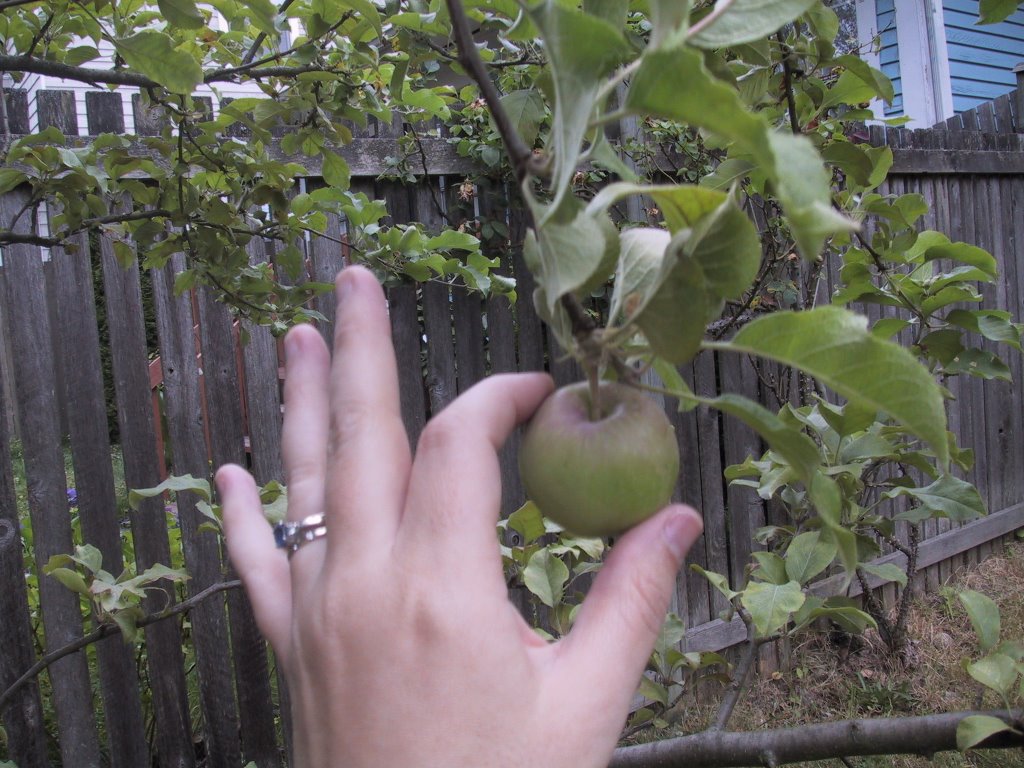
(This is the first year in which our little tree has grown fruit. We're so proud, even though the House of Glee did nothing to help it along.)

Sunday, January 01, 2006

New Year's Resolutions for Fairy Tale Characters


Red Riding Hood:
1) Update glasses prescription.
2) Set up and keep yearly eye appointments with the optometrist.


Briar Rose:
1) Investigate textiles industry to find out how cloth is really made.
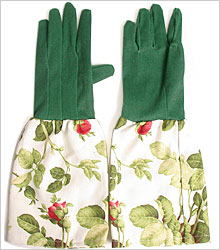
2) Wear heavy-duty gardening gloves when touching sharp objects.


Snow White:
1) Exercise extreme caution when giving out email addresses over the internet.
2) Teach the dwarves to make their own beds so there's extra time in the morning for yoga practice.


Please add to the list:

Tuesday, November 15, 2005

Heliotrope

Memo to Philip the Pun:

You've stumped the storyteller. While there are a number of associations for the word "heliotrope," it has no meaning for me other than its Greek reference to the sun. According to some sources, the scent is akin to vanilla. Other sources say heliotrope smells more like cherry pie. Until I myself come into contact with a heliotrope plant (and I'll be careful not to eat it-- if it's poisonous to cattle, it can't be all that good for my innards), I shall invoke clause #3 of my Storytelling Guidelines and provide for you a fairy tale in the common domain that uses the word "heliotrope." Here it is:

How Summer Came to Canada

If Cecily Barker's flower fairy art is to your taste, you may find interesting her interpretation of The Heliotrope Fairy. I myself am not a fan of Barker's work. I think fairies should be portrayed with dirt-encrusted toenails and wild, tangled hair. Barker's fairies look as if they were on their way to a costume ball and stopped in the meadow for a pastoral photo opportunity.

Wednesday, October 12, 2005

Vasilisa the Brave and the doll of intuition


The story of Vasilisa the Brave (or "Beautiful," depending upon who's telling the story) has two endings: the first ending is when she returns home from her visit to Baba Yaga, and the second ending (a denoument, really) deals with her fine weaving skills that facilitate her meeting with the Tsar. What I love most about this story is the doll that Vasilisa carries in her pocket. In Women Who Run With the Wolves, Clarissa Pinkola Estes writes about the doll as a symbol of Vasilisa's intuition. There are times when Vasilisa speaks, and times when she keeps her thoughts to herself.

Sometimes, there are people who just don't get it when in fairy tales the main character receives help from others. They complain, "What's so great about Vasilisa when it's the dolly who does all of the work?" It is one thing in a novel when human beings do all the work for the main character. However, a fairy tale is not a novel. A fairy tale is deliberately two-dimensional, methodically archetypal. Can you imagine how tedious it would be if the main character simply discovered his or her inner courage without any impetus to do so? Besides, in many of the stories, the characters who are too prideful to offer or accept any help from beings that seem weaker than they are often the ones who end up turned to stone or with their heads chopped off.

For a time, I carried a little wood-and-cloth dolly in my pocket to remind myself to trust strong inklings. I even made "intuition dollies" for friends. I almost flipped out when I thought I had lost the doll right before my Comprehensive Exams, and then had to give myself a stern pep talk about superstitious thoughts. I think that may be the biggest reason as to why I don't wear a brown scapular. I get attached to things. I worry. Like Dumbo (yes, I have actually watched Disney cartoons), I need to learn to let go of the feather.

Still, if I ever have to go to the woods to borrow some fire from Baba Yaga, you had better believe I'm going to hold onto my dolly.

Wednesday, August 31, 2005

Aid and Assistance

Dear people of New Orleans as well as all others directly affected by Hurricane Katrina,

I'm thinking of you. We all are thinking of you. We are going to do what we can to help. Whether it is donating money to the Red Cross, joining the volunteer rescue squads, or anything else of benefit, we are going to do all we can to the best of our abilities and resources.

In the meantime, here is a Flood story from Korea. It has many familiar elements of the fairy tales you know, not the least of which is helping others in distress:

A son was borne to a fairy and a laurel tree; the fairy returned to heaven when the boy was seven years old. One day, rains came and lasted for many months, flooding the earth with a raging sea. The laurel, in danger of falling, told his son to ride him when it came uprooted by the waves. The boy did so, floating on the tree for many days. One day a crowd of ants floated by and cried out to be saved. After asking the tree for permission, the boy gave them refuge on the branches of the laurel. Later, a group of mosquitoes flew by and also asked to be saved. Again, the boy asked the tree for permission, was granted it, and gave the mosquitoes rest. Then another boy floated by and asked to be saved. This time the tree refused permission when its son asked. The son asked twice more, and after the third time the tree said, "Do what you like," and the son rescued the other boy. At last the tree came to rest on the summit of a mountain. The insects expressed their gratitude and left. The two boys, being very hungry, went and found a house where an old woman lived with her own daughter and a foster-daughter. As everyone else in the world had perished and the subsiding waters allowed farming again, the woman decided to marry her daughters to the boys, her own going to the cleverer boy. The second boy maliciously told the woman that the other boy could quickly gather millet grains scattered on sand. The woman tested this claim, and the first boy despaired of ever succeeding, when the ants came to his aid, filling the grain bag in a few minutes. The other boy had watched, and he told the woman that the task hadn't been done by the first boy himself, so the woman still couldn't decide which daughter to marry to which boy. She decided to let the boys decide by chance, going to one room or another in total darkness. A mosquito came and told the Son of the Tree which room the old woman's daughter was in, so those two were married, and the second boy married the foster-daughter. The human race is descended from those two couples.

--Zong In-Sob. Folk Tales from Korea, Routledge & Kegan Paul Ltd., London, 1952.

Friday, August 26, 2005

Three Wishes

It's really not fair when someone all-knowing offers a mere mortal Three Wishes with no guidance whatsoever. With free rein like that, it is inevitable that someone would end up with a sausage hanging from the end of the nose.
We, however, shall not be so foolish. We have read the stories. We have learned from from sages and fools. This time, we're going to do it right.

While I am not all-knowing, I shall be your fairy godmother of the moment. I offer you three wishes. In addition to the usual rules (i.e. no wishing for all the wishes in the world, no wishing ill upon anyone), I shall help you form your wishes thus:

1) One wish may be for altruistic purposes.

2) One wish may be for materialistic purposes.

3) One wish may be for a modest superpower.


If my fairy godmother happens to read this post, here are my wishes:

1) From this day forth, everyone in the world gets enough to eat. That food is both nutritious and delicious.

2) I would like for my family a large-enough, affordable, earthquake-tolerant house in the neighborhood of our choice. The house can expand to accomodate guests in comfortable, sound-proof quarters.

3) I would like to be able to stretch my body into a parachute or a boat akin the mother in The Incredibles.

Saturday, July 30, 2005

The Winter Burning: addendum


I had a crisis of conscience in which I realized that no matter how much I justified the retelling of Bernard Evslin's Fionn MacCumhail tales, I was in essence, plagarizing his work. If you are at all interested, I will be happy to email individually those who wish to see my drafts of the story. I intend to tell "The Winter Burning" as a single tale, much as other storytellers recount stories of Beowulf, Odysseus, King Arthur, and other heroes.

This issue is a common dilemma among storytellers. We make mistakes. It is not our responsibility to be perfect, but we do have an obligation to be honorable.