
The last time I took an active part in a fund-raiser involving exercise, I was in fourth grade, and I had people sponsor me for 10 cents a kilometer to walk 10 kilometers (approximately 6.2 miles) for the Crop Hunger Walk. Sometimes a sponsor would pledge 20 cents a kilometer, and I was thrilled. I was less thrilled when I walked the 10 kilometers only to realize that I had lost my sponsor sheet, but this was 1983--years before online donations.
I just joined a team to take part in Seattle's 25th annual Big Climb, of which all proceeds will benefit the Leukemia and Lymphoma Society. Here's my personal page. It's five weeks before the big day, which is March 20.
Why am I doing it? you may wonder. There are several reasons:
1. This is on the front page of The Big Climb: "The Big Climb is a stairclimb up the Columbia Center - the tallest skyscraper in downtown Seattle. There are 69 flights of stairs, 1311 steps, and 788ft of vertical elevation. Although it will be challenging, it pales in comparison to what blood cancer patients go through."
2. I'm climbing with two specific people in mind.
3. The more I do things that are really hard (but beneficial), the more I will be willing to do things that are really hard.
Showing posts with label seattle. Show all posts
Showing posts with label seattle. Show all posts
Sunday, February 13, 2011


Tuesday, May 26, 2009
On Foot
In the New York Times online, I was interested to read an article by Nicolai Ouroussoff that a stretch of streets in New York City between 42nd -47th were now closed to traffic in order to shape a more pedestrian-friendly Times Square. What I found most poignant was the last paragraph:
What’s most encouraging about [transportation commissioner, Janette Sadik-Khan's]vision is that it reasserts the positive role government can play in shaping the public realm after decades of sitting by and watching private interests take over. Now she has to prove that she can be as nimble in her design choices as she is at imposing her ideas on a skeptical city.
Years ago, Downtown Seattle had a section of Pine Street by Westlake Center closed to traffic. I lived in Seattle during that time, as it was my "gap year" between college and graduate school when I worked as an assistant teacher in a daycare center for children of homeless parents. At the risk of sounding overly nostalgic, these were the days before the Convention Center blocked the view of Elliot Bay and the Pike Place Market Sign. Since then, some decrepid buildings have been torn down, but so have a number of beautiful old houses to make way for tall, expensive townhomes.
In 1994, I appreciated the fact that there was one street where cars could not go. It was easy to meander around the plaza and listen to busking musicians. I was only there for a year and therefore not eligible to vote in 1995 against Nordstrom opening up that street. Nordstrom basically said that if they couldn't open up that street, they wouldn't take over the former Fredrick & Nelson building.
From the beginning of its Westward Expansion history, Seattle has rarely taken the long-range view of anything. People who participate in the infamous Underground Tour learn that lesson pretty quickly. I was going to recount some of the high points (or rather, low points), but I decided to link to this article instead where you can read about some of the mishaps and mistakes. For those who don't want to follow the link, I'll give you a cryptic summary of one of the historical vignettes: "exploding toilet syndrome."
Given our history, it's highly unlikely that Seattle will ever again close a stretch of street for pedestrian use. We can't even agree on what to do about the Alaskan Way viaduct, a stretch of highway that will most definitely not survive the next major earthquake. After voting 4 times in favor of a monorail, the city has said, "No monorail" and "Sorry, we can't give you back your monorail tax money because we already spent it." Our bus system has gone from being one of the best in the country to something really subpar because people voted on a flat-rate license tab renewal fee that took money away from public transportation.
One of the reasons why the House of Glee continues to live where we live is because currently, we can make it work to have just one car. We live on a busy street with a major bus-line, and we can walk to grocery stores and banks within a two mile radius. It would be a long walk, but we could in theory walk to Lucia's school, as it's two miles away. Our local library is six blocks away. If we were to move to a quieter part of town (for a moment, I'll pretend we can afford to do this) or I were to expand my storytelling business, we would definitely need a second car.
What’s most encouraging about [transportation commissioner, Janette Sadik-Khan's]vision is that it reasserts the positive role government can play in shaping the public realm after decades of sitting by and watching private interests take over. Now she has to prove that she can be as nimble in her design choices as she is at imposing her ideas on a skeptical city.
Years ago, Downtown Seattle had a section of Pine Street by Westlake Center closed to traffic. I lived in Seattle during that time, as it was my "gap year" between college and graduate school when I worked as an assistant teacher in a daycare center for children of homeless parents. At the risk of sounding overly nostalgic, these were the days before the Convention Center blocked the view of Elliot Bay and the Pike Place Market Sign. Since then, some decrepid buildings have been torn down, but so have a number of beautiful old houses to make way for tall, expensive townhomes.
In 1994, I appreciated the fact that there was one street where cars could not go. It was easy to meander around the plaza and listen to busking musicians. I was only there for a year and therefore not eligible to vote in 1995 against Nordstrom opening up that street. Nordstrom basically said that if they couldn't open up that street, they wouldn't take over the former Fredrick & Nelson building.
From the beginning of its Westward Expansion history, Seattle has rarely taken the long-range view of anything. People who participate in the infamous Underground Tour learn that lesson pretty quickly. I was going to recount some of the high points (or rather, low points), but I decided to link to this article instead where you can read about some of the mishaps and mistakes. For those who don't want to follow the link, I'll give you a cryptic summary of one of the historical vignettes: "exploding toilet syndrome."
Given our history, it's highly unlikely that Seattle will ever again close a stretch of street for pedestrian use. We can't even agree on what to do about the Alaskan Way viaduct, a stretch of highway that will most definitely not survive the next major earthquake. After voting 4 times in favor of a monorail, the city has said, "No monorail" and "Sorry, we can't give you back your monorail tax money because we already spent it." Our bus system has gone from being one of the best in the country to something really subpar because people voted on a flat-rate license tab renewal fee that took money away from public transportation.
One of the reasons why the House of Glee continues to live where we live is because currently, we can make it work to have just one car. We live on a busy street with a major bus-line, and we can walk to grocery stores and banks within a two mile radius. It would be a long walk, but we could in theory walk to Lucia's school, as it's two miles away. Our local library is six blocks away. If we were to move to a quieter part of town (for a moment, I'll pretend we can afford to do this) or I were to expand my storytelling business, we would definitely need a second car.
Tuesday, May 15, 2007
Homefront
I've recovered from Lucia's birthday party, and am happy to report that all of my garden plants are still intact. Yesterday, Bede dug a spot for my blueberry and red raspberry bushes. Today, I weeded extensively in the back yard (North) and the West side of our house, planted some new shade and part-shade plants, and dug out a lot of broken glass. Our neighborhood has experienced a lot of crime over the past decades and is in recovery mode now. Our neighbors who have lived here for several generations are concerned about gentrification. I don't want gentrification, but I do want beautification. I pick up a lot of discarded bottles, cans and candy-wrappers on our street. Every time I dig in the yard, I gather large glass shards that have worked its way up from the soil. I feel committed to staying in this neighborhood-- I did plant rhubarb after all-- but there are times when I'm wistful for a setting with fewer issues.
We live in a multicultural neighborhood, and that's the kind of setting in which I want my daughter to grow up. Still, our neighborhood is considered to be "in transition." Many of us have had things stolen from yards, cars broken into, or houses robbed. Some of us have had to deal with other crimes, too. Bede, Lucia and I can take walks in the evening and feel reasonably secure about our safety (as much as anyone can), but Lucia is not allowed to play alone in the front-yard. At one point, some of our neighbors had children, but they've all moved away.
Why do we stay?
1) We bought our house during the 3 seconds that it was a buyer's market in Seattle. At this point, we could easily sell our quirky little house, but we wouldn't be able to afford anything else in the city.
2) We can walk to the library, grocery stores, coffee-shops and other small businesses. We live on a street that has a direct bus-line to Downtown, and most of the time, we need only one car.
4) There is a plethora of Ethiopian restaurants in the area. I grew up in the Washington D.C. Metropolitan area and Ethiopian food was a staple in our family.
5) It takes five years just begin to get settled into one place.
We live in a multicultural neighborhood, and that's the kind of setting in which I want my daughter to grow up. Still, our neighborhood is considered to be "in transition." Many of us have had things stolen from yards, cars broken into, or houses robbed. Some of us have had to deal with other crimes, too. Bede, Lucia and I can take walks in the evening and feel reasonably secure about our safety (as much as anyone can), but Lucia is not allowed to play alone in the front-yard. At one point, some of our neighbors had children, but they've all moved away.
Why do we stay?
1) We bought our house during the 3 seconds that it was a buyer's market in Seattle. At this point, we could easily sell our quirky little house, but we wouldn't be able to afford anything else in the city.
2) We can walk to the library, grocery stores, coffee-shops and other small businesses. We live on a street that has a direct bus-line to Downtown, and most of the time, we need only one car.
4) There is a plethora of Ethiopian restaurants in the area. I grew up in the Washington D.C. Metropolitan area and Ethiopian food was a staple in our family.
5) It takes five years just begin to get settled into one place.
Saturday, December 16, 2006
Storm
Around town: Floods, landslides, winds, downed trees
A couple of days ago, we had a big windstorm combined with heavy rains and flooding. We were fortunate. Our electical power went off for 24 hours from early Friday to early Saturday morning (taking the gas heat with it, as the gas is linked to the electric), but we got to spend the day with friends who still had electical power. Last night, we all slept in a pile like walruses.*

This morning, Lucia has a low fever. Many homes are still without power, four people died,including a woman who got trapped in the utility closet in her basement when flood waters rushed in not too far away from where we live. In North Seattle, a woman brought her coughing 1 year old daughter into the main bedroom. Five minutes later, a tree crashed through the house and into the crib where the daughter had lain.
*Ever since I read See You Around, Sam! by Lois Lowry, I've hung onto this image.
A couple of days ago, we had a big windstorm combined with heavy rains and flooding. We were fortunate. Our electical power went off for 24 hours from early Friday to early Saturday morning (taking the gas heat with it, as the gas is linked to the electric), but we got to spend the day with friends who still had electical power. Last night, we all slept in a pile like walruses.*

This morning, Lucia has a low fever. Many homes are still without power, four people died,including a woman who got trapped in the utility closet in her basement when flood waters rushed in not too far away from where we live. In North Seattle, a woman brought her coughing 1 year old daughter into the main bedroom. Five minutes later, a tree crashed through the house and into the crib where the daughter had lain.
*Ever since I read See You Around, Sam! by Lois Lowry, I've hung onto this image.
Sunday, September 25, 2005
Money and Run

Last night, a group of us went to see Theater Schmeater's new episode of Money and Run, the serialized story of two outlaws of Crudup County. The new episode, Juke Box Momma, was filled with the usual assortment of features we expect and enjoy: hard rock from the 1970's, slow-motion fist-fights, and homages to The Dukes of Hazzard ("Run" wears a General Lee tee-shirt and "Money" sports an "01" tattoo.) Earlier episodes include "Ninjas and Nuns" (my favorite so far), "Save the Last Dance for Run" (with lots of silly, overt references to Dirty Dancing and Flashdance) and Eyepatch of the Tiger.
I'm sure you've seen better theatre with more highbrow performances, but tell me, did you have fun? Were you allowed to bring your drinks inside the theatre? Were you able to afford drinks after you'd paid for your tickets? (If the answer is "yes" to all three questions, please tell me about the theatre companies you like.) I won't turn down an invitation to the Paramount Theatre,* but when I have to pay for my own entertainment, I'm going to the Theater Schmeater. Of course, now that I'm a parent, I have to work on staying awake long enough to make it to the show. Once upon a time, 11 pm was the beginning of my evening. Now, it's way past my bedtime.
______
*Silent Movie Mondays are first-date affordable. Each film is accompanied by Dennis James on the Mighty Wurlitzer Organ. I've always enjoyed my Silent Movie Monday outings, rare though they be.
Monday, July 18, 2005
Earthqu-ache of Yesteryear
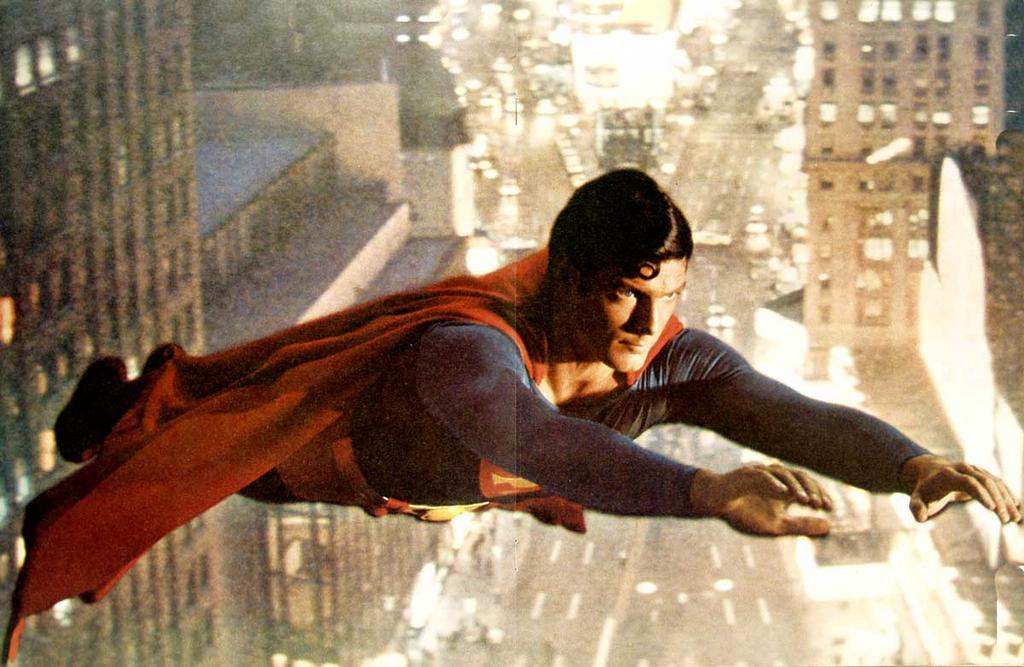 When I was 6 years old, my father took me to see "Superman." I left the theatre with a crush on Christopher Reeve and a vow never to live in California. I didn't want to have to deal with earthquakes.
 In 1994, when I moved to Seattle for the first time, I had no idea that the Puget Sound area was on a fault line. I was on the phone with a friend from the East Coast when I experienced my first earthquake. The earthquake registered 5.0 on the Richter scale, and had the effect of making me giggly. As I sat under my desk, phone in hand, the room shook and I laughed. My friend on the phone was only mildly concerned.
Six years later, I was back in Seattle, newly married, and getting ready to work a long day (1-9 pm). I had been out of the shower for only a few minutes before the floor began to buckle and heave. I made my way toward the nearest doorway frame and waited for the house to shake a few more times before calming down. It didn't calm down. It got faster and more forceful. I considered the possibility that the earthquake would never end. I pictured myself hanging onto the railing of the stairs in my apartment building. I imagined that was how FEMA would find me.
The event was dubbed "the Nisqually earthquake." It registered 6.8 on the Richter scale, but was so deep that the damage was not as extensive as it might have been. Since Seattlites love drama, the news stations repeatedly showed pictures of the same demolished car, the same caved-in building. I would have appreciated the footage much more had my parents not seen it on the news.
While I was outside, waiting for possible aftershocks and talking with the neighbors across the street, a van pulled up. Val, a friend of mine I hadn't seen in years stuck her head out the window and said, "Alkelda! What's going on?"
"We had an earthquake," I said.
"Really?" Val was genuinely puzzled. "I just thought the tires were going flat."
I wrote this post for tony.dowler.com on February 28, 2001, the day of the Nisqually earthquake:
I was at home when the earthquake hit. The phone lines were clogged, but DSL was working fine. However, the keyboard was not-- neither the "i" nor the "k" was functioning. So, this is the email message I sent out:
The earthquae ht after eye had just gotten out of the shower. eye was able to get outsde and stand wth neghbors. they had been wocen up by the earthquae and were wrapped up en blanquets. the phone lns are not worcng now but dsl es. mracle of mracles! ths on ash wednesday of all days. eye am ocay. eye hope there are no bg aftershocs. yes et was scary. Don't tell any one eye sed "help!" before eye ran out sde n my bathrobe and slppers.
It could have been worse. The earthquake happened during a lot of library storytimes. Most people kept their heads, but one mother ran out of the story room and left her child inside. Someday, I'm going to write a Young Adult novel about that child.
Subscribe to:
Posts (Atom)


